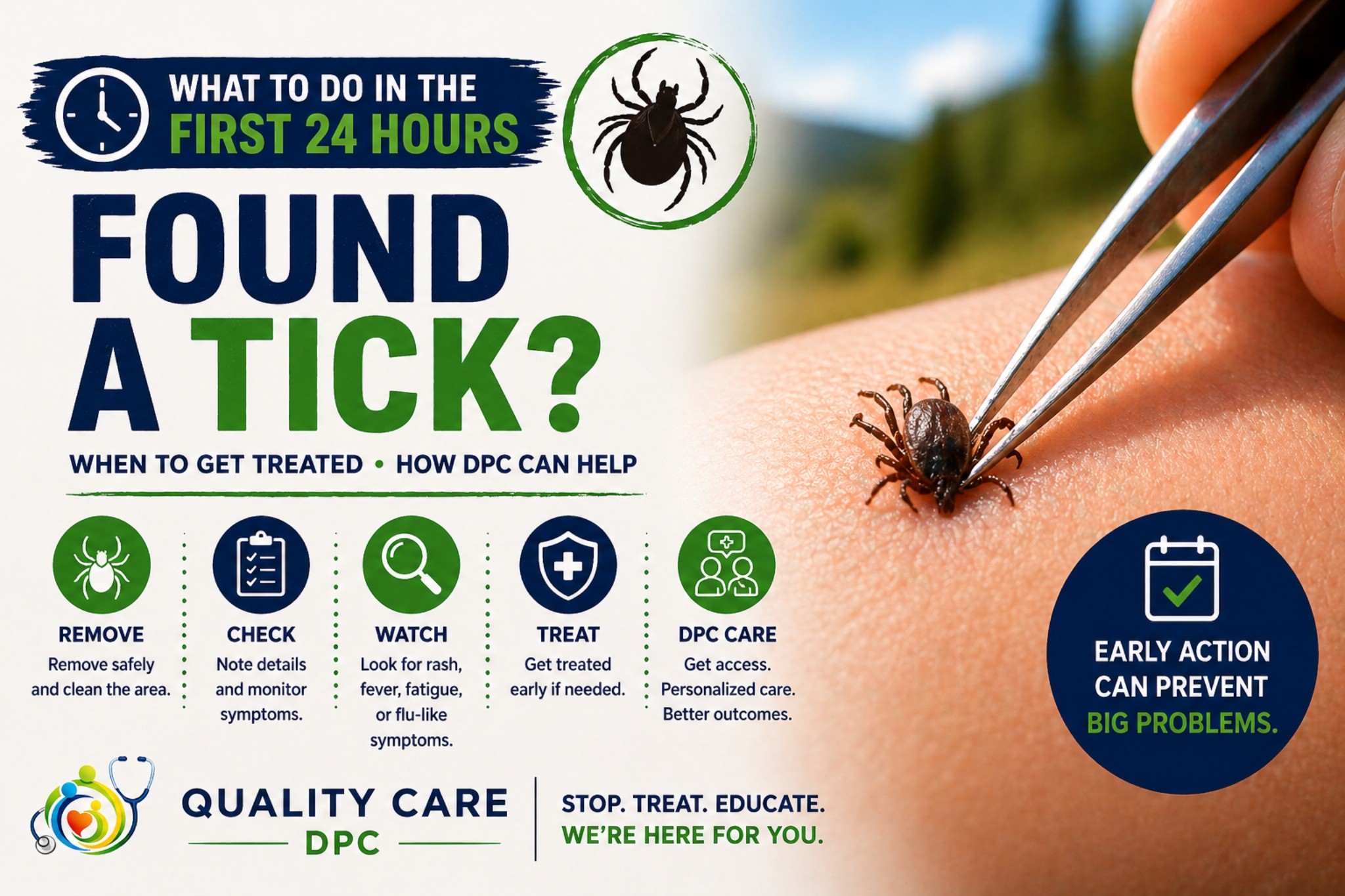
Spending time outdoors is one of the best parts of warm weather—hiking, yard work, parks, camping, sports, and family adventures.
But with more time outside comes something many people in North Carolina and across the country run into every year: ticks.
Finding a tick can create instant anxiety. Should you worry? Do you need antibiotics? What if it was attached? What if symptoms show up later?
The first 24 hours matter—not because every tick bite becomes a serious problem, but because early action, proper removal, and knowing what to watch for can make a big difference.
At Quality Care DPC, we help patients quickly assess tick bites, guide next steps, and provide education and treatment when appropriate.
First: Don’t Panic
Most tick bites do not automatically lead to Lyme disease or another tick-borne illness.
But the best approach is to act promptly and correctly.
The goal in the first 24 hours is to:
Remove the tick safely
Clean the area
Identify possible risk factors
Monitor symptoms
Know when treatment may be needed
Get expert guidance if you’re unsure
Step 1: Remove the Tick Properly
Use fine-tipped tweezers if possible.
How to Remove It:
Grasp the tick as close to the skin as you can.
Pull upward with steady, even pressure.
Avoid twisting or crushing it.
Clean the bite area and your hands with soap and water or alcohol.
Avoid These Common Mistakes:
Burning the tick
Covering it with petroleum jelly
Squeezing the body of the tick
Digging into the skin aggressively
Proper removal reduces irritation and helps lower risk.
Step 2: Save Information if You Can
If possible, note:
When you found it
Where on the body it was attached
Whether it looked attached or crawling
How long it may have been there
What area you were in outdoors
Some people choose to save the tick in a sealed bag or take a photo. This can be helpful in some situations, though it’s not always necessary.
Step 3: Watch for Symptoms
Many tick bites cause nothing more than local irritation.
But symptoms that may need medical attention can include:
Fever
Chills
Fatigue
Headache
Body aches
Joint pain
Swollen lymph nodes
Rash
Expanding redness
Flu-like symptoms
A classic “bullseye” rash can happen with Lyme disease—but not everyone gets one.
When to Consider Treatment
Not every tick bite needs antibiotics, but some situations deserve prompt medical review.
Treatment may be considered depending on factors such as:
Tick type
How long it was attached
Whether it was engorged
Your geographic location
Symptoms developing after the bite
Rash or illness after exposure
Other tick-borne disease risk factors
The earlier concerns are evaluated, the easier it is to decide the right next step.
What to Do in the First 24 Hours
Here’s a simple checklist:
✔ Remove the Tick Safely
Use tweezers and clean the area.
✔ Take a Photo or Note Details
Helpful if symptoms develop later.
✔ Monitor How You Feel
Pay attention over the next days and weeks.
✔ Reach Out Early if Unsure
Getting guidance quickly can prevent unnecessary worry or delays.
How a DPC Can Help With Tick Bites and Lyme Disease
One of the biggest advantages of Direct Primary Care is fast access when something happens now.
Instead of waiting days for an appointment or sitting in urgent care, you can reach out directly for guidance.
At Quality Care DPC, we can help by:
Quick Same-Day Guidance
You find a tick and want to know what to do. We help you assess the situation quickly.
Treatment When Appropriate
If symptoms, exposure risk, or timing suggest treatment may help, we guide next steps promptly.
Ongoing Monitoring
Some symptoms show up later. Having a provider who knows your history matters.
Education and Prevention
We help patients learn how to reduce future risk, check for ticks properly, and know warning signs.
Peace of Mind
Sometimes the biggest need is knowing whether this is serious or not.
How to Help Prevent Tick Bites
Prevention is powerful.
Use tick repellent when outdoors
Wear long sleeves or pants in wooded areas
Tuck pants into socks on trails
Shower after outdoor activity
Do tick checks after hikes, yard work, and play
Check pets too
Wash clothing after outdoor exposure
Don’t Wait If Symptoms Start
If you develop fever, rash, flu-like illness, unusual fatigue, or worsening symptoms after a tick bite, don’t ignore it.
Early care matters.
At Quality Care DPC, we help patients stop guessing, get answers faster, and feel supported when health concerns happen in real life.
Because finding a tick should come with a plan—not panic.
Recent Blog
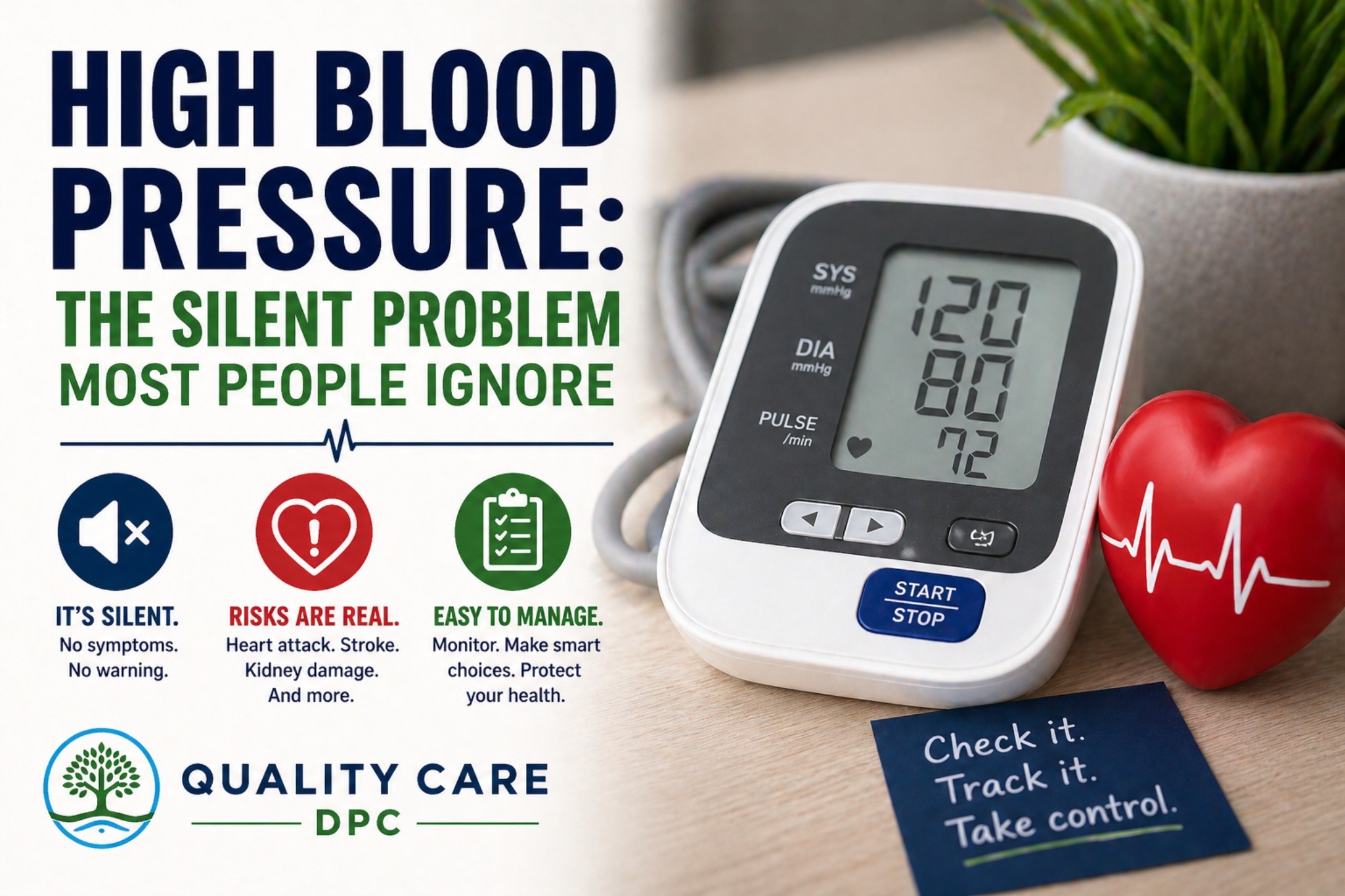
High Blood Pressure: The Silent Problem Most People Ignore
The silent killer - High blood pressure
Why You’re Still Burned Out—And It’s Not Just Stress
Burnout hurts and can effect everyone

Real Mental Health Care Starts With Being Heard
What Does Mental Health Care Actually Look Like in a DPC?
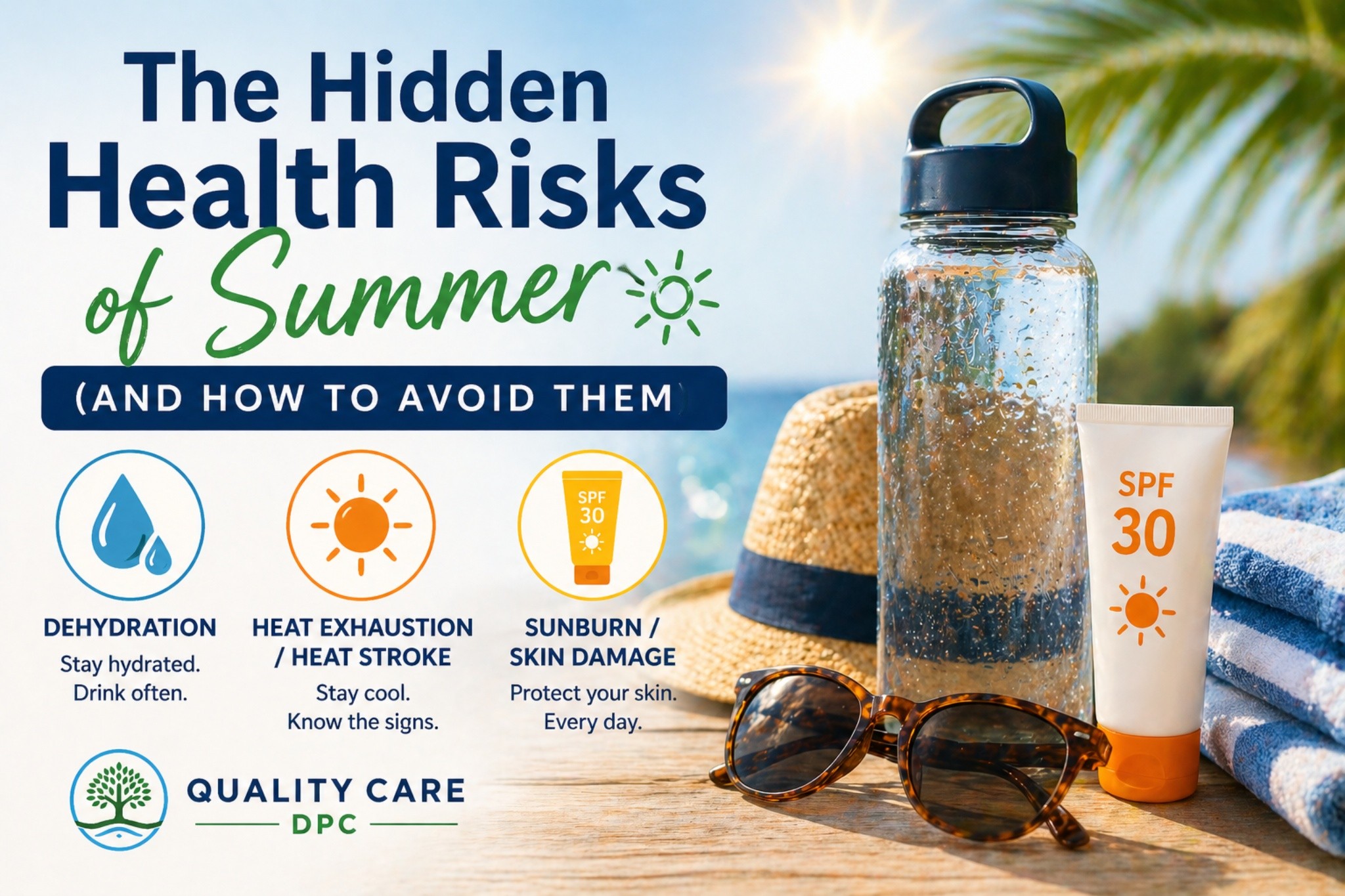
The Hidden Health Risks of Summer (And How to Avoid Them)
Hidden risks of summner time

Anxiety Isn’t Always “Just Anxiety”: What Your Body Might Be Trying to Tell You
How to listen to your body

Welcome to Better Healthcare: Getting Started with Direct Primary Care at Quality Care DPC
Getting started with Direct Primary Care
Sleep Is the Foundation: Why Fixing Your Sleep Might Improve Your Mood More Than Medication
Sleep is a key part of health
Found a Tick? What to Do in the First 24 Hours (And When to Get Treated)
Everything you need to know about ticks