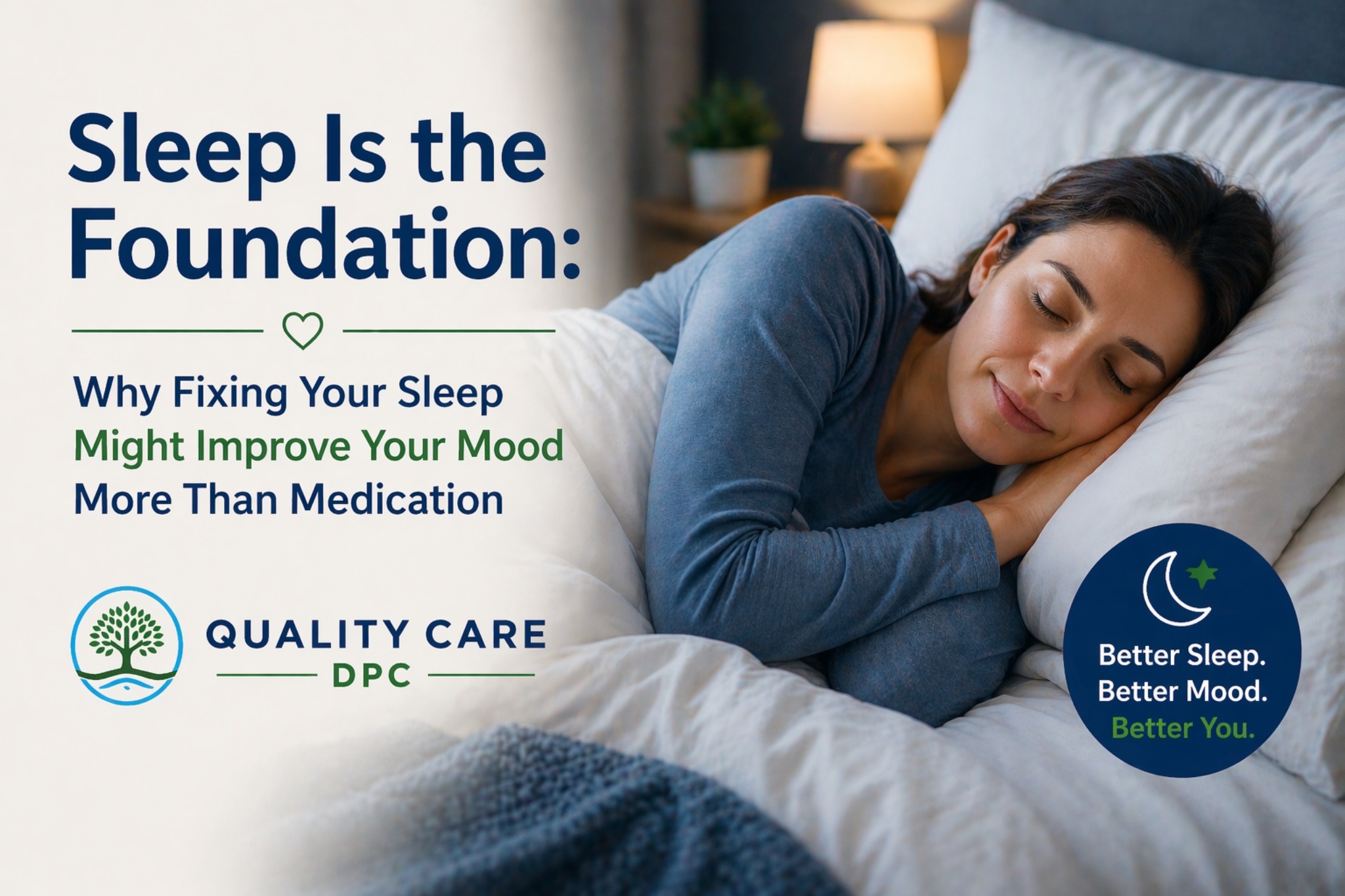
Sleep is often the first thing people sacrifice—and one of the last things they realize is affecting everything else.
When life gets busy, many people accept poor sleep as normal. They power through exhaustion, rely on caffeine, feel emotionally drained, and assume their low mood, irritability, anxiety, or brain fog is simply part of modern life.
But sleep is not a luxury. It is a biological foundation for mental and physical health.
At Quality Care DPC, we help patients understand that better sleep can be one of the most powerful tools for improving mood, energy, resilience, and overall wellness.
Sometimes the answer isn’t adding more—it’s restoring what your body has been missing.
Sleep Affects More Than Energy
Most people know poor sleep can make them tired. What many don’t realize is how deeply it impacts emotional health.
Even one night of poor sleep can affect:
Mood regulation
Stress tolerance
Patience
Focus and memory
Anxiety levels
Motivation
Cravings and appetite
Hormone balance
Immune function
When poor sleep becomes chronic, it can begin to feel like depression, anxiety, burnout, or emotional instability.
Why Sleep and Mood Are So Connected
Your brain does important repair work while you sleep.
During healthy sleep cycles, the body helps regulate stress hormones, process emotions, restore energy systems, and support brain function. When sleep is disrupted, those systems suffer.
That can look like:
Feeling emotionally reactive
Increased anxiety
Low motivation
Trouble concentrating
Feeling overwhelmed easily
Sadness or flat mood
Brain fog
Constant fatigue
Sometimes people think they need more willpower when what they really need is deeper rest.
It’s Not Always About Medication First
Medication can be helpful and important for some people. But for many patients, sleep issues are never fully explored before treatment begins.
If someone is sleeping 4–5 broken hours a night, waking constantly, running on stress, and exhausted every day, it makes sense that mood may suffer.
That doesn’t mean medication is wrong. It means sleep should also be part of the conversation.
Because you cannot medicate your way out of chronic deprivation.
Why You Might Not Be Sleeping Well
Poor sleep is common, but it is not always random.
Common contributors include:
High stress levels
Irregular schedule
Screen use late at night
Sleep apnea
Hormone changes
Anxiety
Blood sugar swings
Caffeine dependence
Alcohol use
Poor sleep habits
Chronic pain
Nervous system overload
Finding the cause matters.
What Better Care Looks Like
At Quality Care DPC, we take a root-cause approach to fatigue, low mood, and sleep concerns.
That may include:
Reviewing your sleep patterns
Exploring stress and daily habits
Looking for medical contributors
Discussing lifestyle changes
Ordering labs when appropriate
Screening for sleep disorders
Creating a realistic improvement plan
Following up and adjusting over time
Because real care doesn’t stop at symptoms.
Better Sleep Can Change More Than You Think
When sleep improves, many patients notice:
Better mood
More stable energy
Less anxiety
Sharper thinking
Better patience
Stronger motivation
Improved workouts and recovery
Better relationships
Greater resilience
Sleep touches nearly every part of life.
You Deserve to Feel Better
If you’ve been exhausted, emotionally off, anxious, or stuck in survival mode, don’t underestimate the power of sleep.
Sometimes the most effective next step is not doing more—it’s helping your body recover.
At Quality Care DPC, we help patients build better foundations for health, starting with the basics that matter most.
Because sleep isn’t optional. It’s where healing begins.
Recent Blog
High Blood Pressure: The Silent Problem Most People Ignore
The silent killer - High blood pressure
Why You’re Still Burned Out—And It’s Not Just Stress
Burnout hurts and can effect everyone
Real Mental Health Care Starts With Being Heard
What Does Mental Health Care Actually Look Like in a DPC?

The Hidden Health Risks of Summer (And How to Avoid Them)
Hidden risks of summner time
Anxiety Isn’t Always “Just Anxiety”: What Your Body Might Be Trying to Tell You
How to listen to your body

Welcome to Better Healthcare: Getting Started with Direct Primary Care at Quality Care DPC
Getting started with Direct Primary Care
Sleep Is the Foundation: Why Fixing Your Sleep Might Improve Your Mood More Than Medication
Sleep is a key part of health
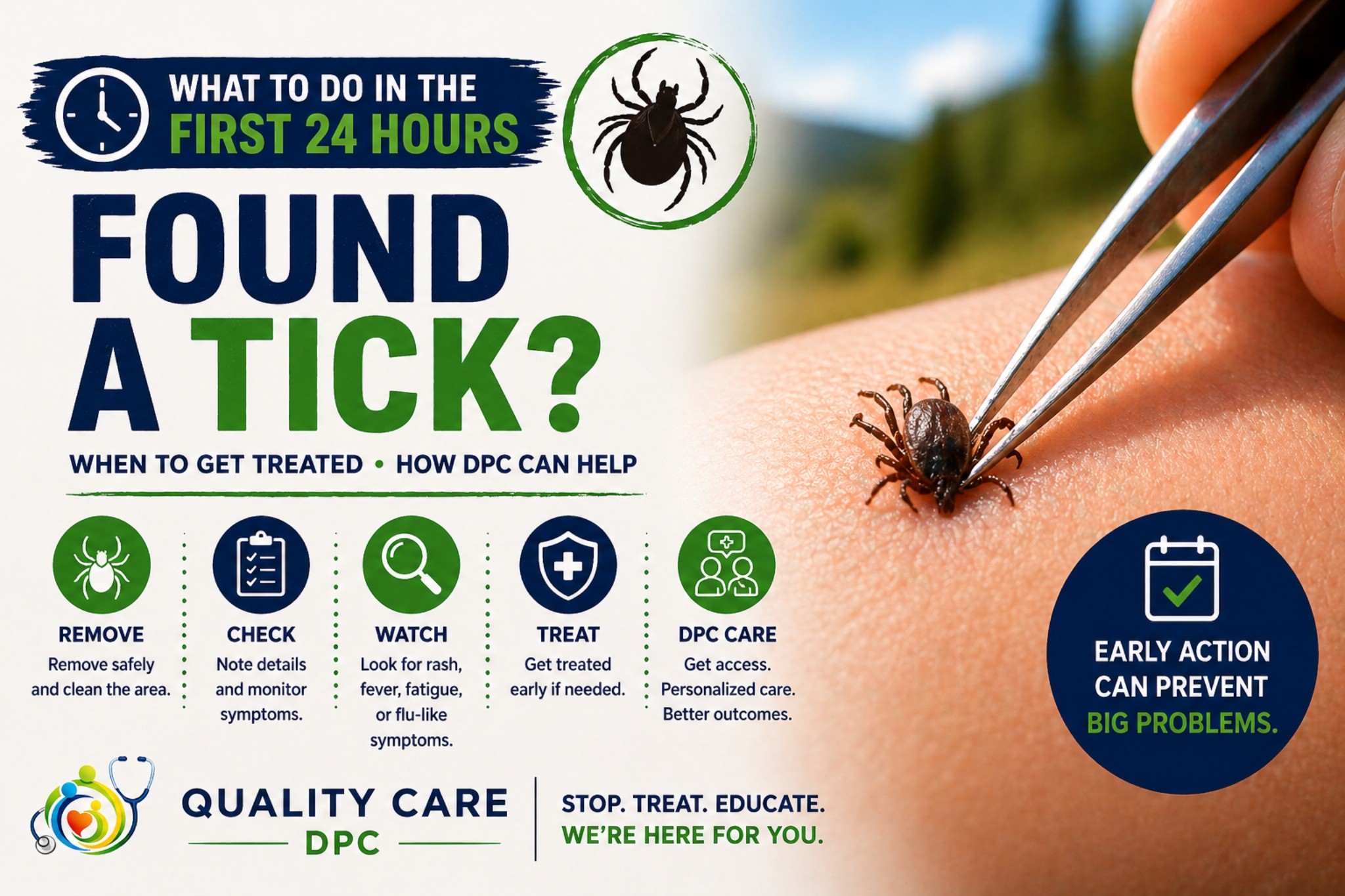
Found a Tick? What to Do in the First 24 Hours (And When to Get Treated)
Everything you need to know about ticks