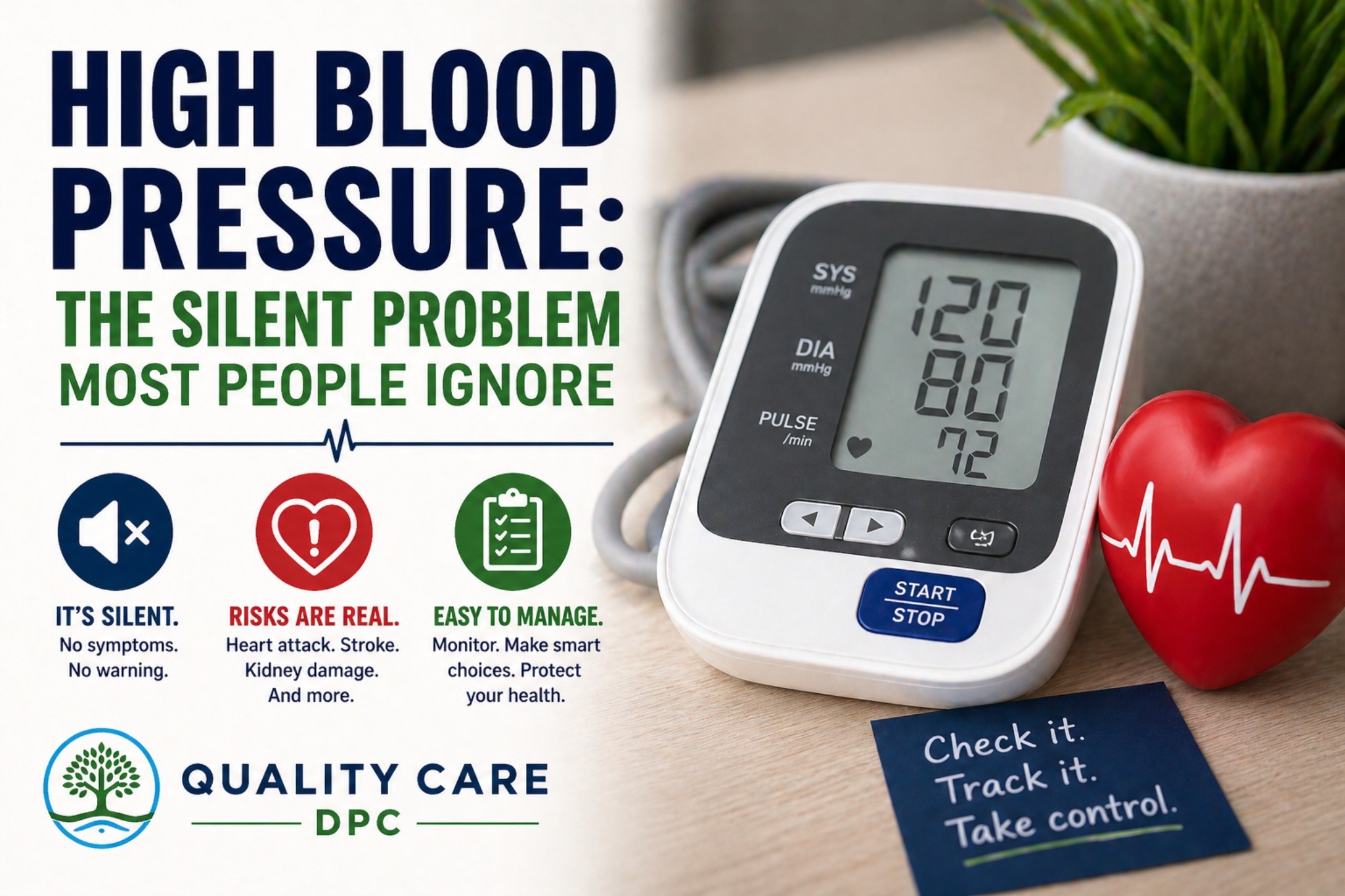
High blood pressure is one of the most common health problems in adults—and one of the easiest to overlook.
Many people feel completely fine while their blood pressure is rising. No pain. No obvious warning signs. No reason to think anything is wrong.
That’s why high blood pressure is often called the silent problem.
It can quietly strain the heart, damage blood vessels, and increase the risk of serious health issues for years before symptoms ever appear.
At Quality Care DPC, we believe prevention and early action matter. The good news is that high blood pressure can often be identified early, monitored easily, and improved with the right plan.
Why High Blood Pressure Often Goes Unnoticed
Unlike many health concerns, high blood pressure usually does not cause symptoms in the early stages.
You may feel normal while damage is slowly happening behind the scenes.
That means many people discover it only when:
It’s found at a routine visit
They check it at home
They need surgery or another procedure
They develop complications
They go to urgent care or the ER for another reason
Because it can be silent for so long, regular monitoring matters.
What Is Blood Pressure?
Blood pressure is the force of blood pushing against the walls of your arteries.
When that pressure stays too high over time, it can put stress on your heart and blood vessels.
Blood pressure can rise for many reasons, including:
Genetics
Stress
Poor sleep
High sodium intake
Weight gain
Low physical activity
Kidney issues
Alcohol use
Smoking
Hormonal or metabolic factors
Aging
Sometimes it is one factor. Often it is several working together.
Risks of Untreated High Blood Pressure
Because it often feels harmless, many people delay taking it seriously.
But untreated high blood pressure increases the risk of:
Heart Attack and Heart Disease
The heart has to work harder over time, which can damage the cardiovascular system.
Stroke
High pressure can damage or block blood vessels in the brain.
Kidney Damage
The kidneys rely on healthy blood flow and can be affected by chronic hypertension.
Vision Problems
Small blood vessels in the eyes can be damaged over time.
Memory and Cognitive Decline
Long-term vascular damage may affect brain health.
Erectile Dysfunction
Blood flow problems can impact sexual health too.
This is why early management matters even when you “feel fine.”
Easy Ways to Monitor Blood Pressure
Monitoring your blood pressure does not need to be complicated.
Use a Home Blood Pressure Cuff
A reliable upper-arm cuff can help you track readings over time.
Check It Consistently
Take readings around the same time of day and follow your provider’s guidance.
Sit Quietly First
Rest for a few minutes before checking. Avoid rushing in from activity.
Keep a Log
Tracking patterns is more helpful than one random number.
Bring Readings to Visits
Home trends often tell a better story than a single office reading.
How to Help Manage Blood Pressure
The best plan depends on the person, but many patients improve blood pressure through a combination of lifestyle support and medical care when needed.
Move Regularly
Walking, strength training, and consistent movement support heart health.
Improve Nutrition
Reducing excess sodium, eating more whole foods, and balancing meals can help.
Prioritize Sleep
Poor sleep and sleep apnea can worsen blood pressure.
Manage Stress
Chronic stress can raise blood pressure and affect habits.
Reach a Healthy Weight
Even modest changes can improve numbers for many people.
Limit Alcohol and Avoid Tobacco
Both can contribute to higher risk.
Take Medication If Needed
Some people need medication—and that can be an important tool, not a failure.
Why Personalized Care Matters
Not everyone has high blood pressure for the same reason.
Some people need help with sleep apnea. Others need weight support, stress management, medication adjustments, or evaluation for underlying contributors.
At Quality Care DPC, we take time to understand the whole picture so patients get a plan that fits real life.
Because managing blood pressure is not about fear—it’s about protecting your future health.
Don’t Wait for Symptoms
One of the biggest mistakes people make is waiting until they feel bad.
High blood pressure often gives no warning before serious problems happen.
Checking it now could prevent bigger issues later.
At Quality Care DPC, we help patients monitor, understand, and improve blood pressure with proactive care and ongoing support.
Because the problems you can’t feel are often the ones most worth catching early.
Recent Blog
High Blood Pressure: The Silent Problem Most People Ignore
The silent killer - High blood pressure
Why You’re Still Burned Out—And It’s Not Just Stress
Burnout hurts and can effect everyone
Real Mental Health Care Starts With Being Heard
What Does Mental Health Care Actually Look Like in a DPC?

The Hidden Health Risks of Summer (And How to Avoid Them)
Hidden risks of summner time

Anxiety Isn’t Always “Just Anxiety”: What Your Body Might Be Trying to Tell You
How to listen to your body

Welcome to Better Healthcare: Getting Started with Direct Primary Care at Quality Care DPC
Getting started with Direct Primary Care
Sleep Is the Foundation: Why Fixing Your Sleep Might Improve Your Mood More Than Medication
Sleep is a key part of health
Found a Tick? What to Do in the First 24 Hours (And When to Get Treated)
Everything you need to know about ticks